
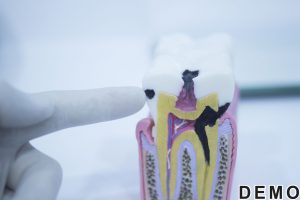
 The most common endodontic surgical procedure is called an apicoectomy or root-end resection.
An apical or apicoectomy is where the root tip and nearby infected tissues are removed.
In some cases, your root canals are unusually narrow or blocked, making a repeated root canal procedure ineffective. In other cases, a root canal procedure may fail or an infection recurs after a long period of time. In these cases, endodontic surgery may be needed and is the only alternative to tooth extraction.
Endodontic surgery is usually called for under the following circumstances:
* Acute pain
* Cracked roots
* Persistent cysts
* Perforated root tips
* Conventionally blocked root tips
* Diagnosis of canals and inner tooth structures that cannot be performed non-surgically
Surgery on the root canal may be used for the treatment of small fractures or canals that were not detected during previous x-rays and treatment. This surgery also allows for removal of calcium deposits and may also be used to treat inflammation or infection in the root tissue or surrounding bone.
The end of the root canal is sealed with a small filling and the surrounding tissue is stitched in place. There is typically very little post surgery issues.
The most common types of endodontic surgical procedures are:
* Apicoectomy
* Hemisection
* Retrosealing
* Intentional replantation
Usually the procedure involves:
A local anesthetic is typically used during root canal surgery. The procedure is begun by exposing the infected roots.
The infected tissue is then removed, along with a few millimeters of the root tip itself. A dye may be used to help make cracks or fractures easy to see; if we discover that the tooth is fractured, it may be better to extract it at this time instead of completing the apicoectomy.
Contact us for more information at (561) 123-1234.