
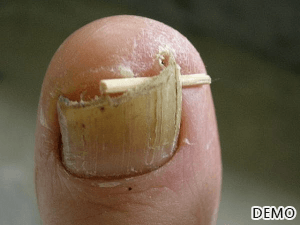
 What is an ingrown toenail and what causes in growing toenails?
The nail becomes ingrown when the side of the nail cuts into the skin next to the nail. Usually there is no apparent reason as to why it occurs. Tight-fitting shoes may be a cause in some cases. It is also more common in people who cut their toenails very short and round. Other possible causes are injury to the nail, a fungal infection of the nail, or possibly, medication such as isotretinoin.
Ingrown toenails is a common disorder that most often affects the outer edge of the big toe. However the nail on any toe, or the nail on both sides of a toe, can become ingrown. The most common signs and symptoms are pain, redness and swelling of the skin adjacent to the corner of a toenail.
Early in the course of an ingrown toenail the end of the toe becomes reddened and painful with mild swelling. There is no pus or drainage. It may feel warm to the touch, but you may not have a fever.
- Once an infection has developed the swelling will become worse, and there may be white or yellow colored drainage from the area. A lighter colored area of the skin may be surrounded by red skin. You may develop a fever, although this is unusual.
In the event of an infection (drainage, a fever, lighter skin surrounded by red skin, or worsening pain and swelling) from an ingrown toenail , seek medical advice. Even if the ingrown toenail is only inflamed without infection, seek medical advice if the following conditions also occur:
If you have incomplete primary immunization for tetanus or have not had your booster tetanus immunizations, then you need to discuss your tetanus status.
- If there is no improvement after three days of home care.
- If you are a diabetic, have poor circulation, HIV/AIDS, are on chemotherapy or have another reason for poor healing or increased risk of infection.
The correct way of cutting nails is straight across. This helps the nail grow normally and may prevent ingrown toenails from developing. If surgery is required, the doctor will examine the toe and choose the best treatment option. Should there be an infection, antibiotics may be necessary.
Often, an office visit is all that’s necessary to take care of the pain of an ingrown or infected toenail. A simple procedure is performed by the doctor, following a complete and thorough inspection of the area, part of the toenail is removed under local anesthetic. Should the nail once again become ingrown, it may be necessary to remove the nail root.
Contact us for more information at (561) 123-1234